Tag: Disinformation
-
Dissertation Submitted: The AI-Driven Disinformation Ecosystem
On September 30, I submitted my dissertation, “The AI-Driven Disinformation Ecosystem: Measurement Validity Across Generation, Perception, Detection, and Mitigation”. The thesis makes two contributions of its own: a reusable sequence of checks for building and evaluating detection benchmarks, and a map that relates claims about disinformation campaigns to the evidence needed to support them. Parts…
-
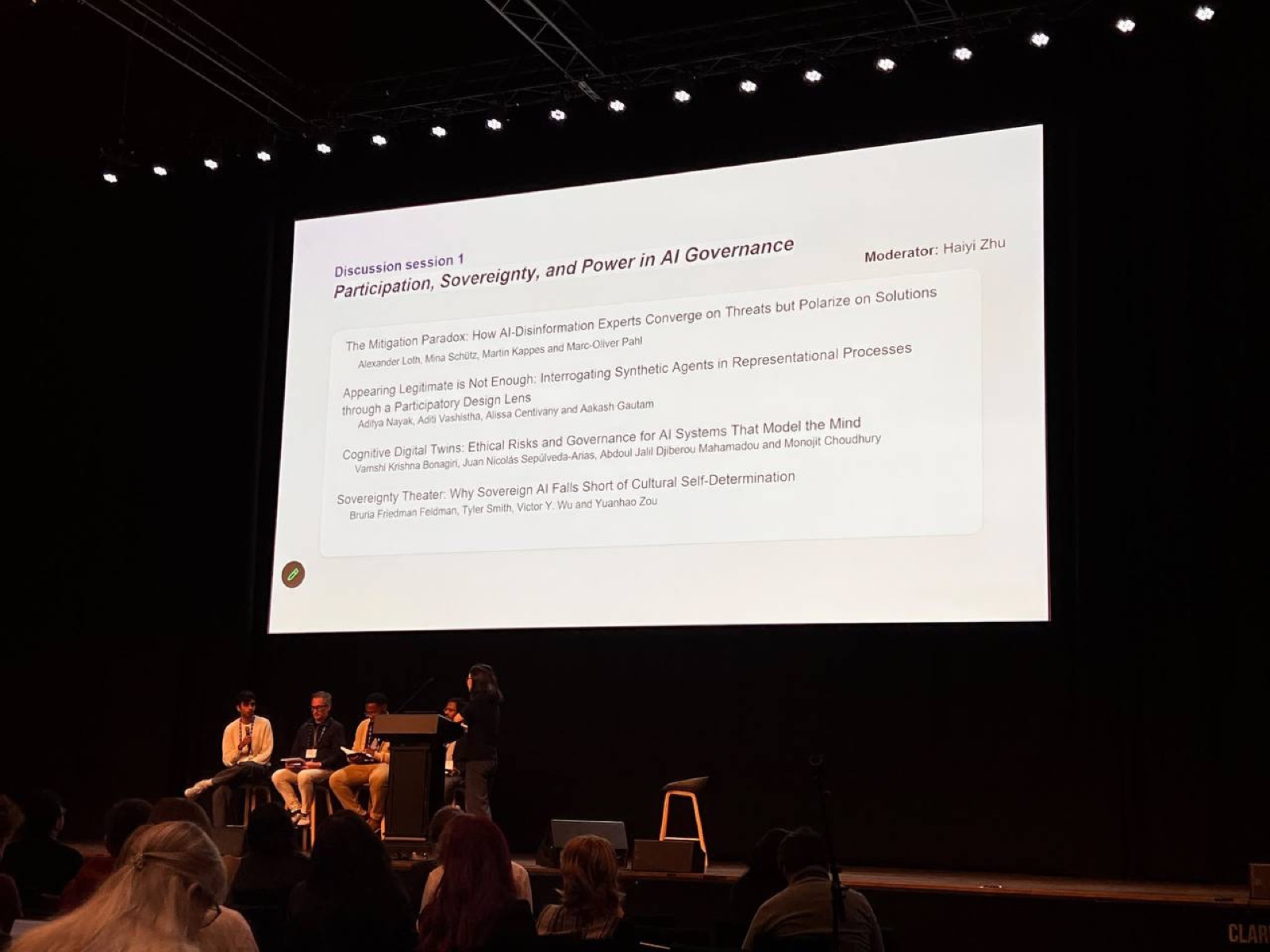
Five Things I Took Home from AIES 2026 in Malmö
AIES 2026, the AAAI/ACM Conference on AI, Ethics, and Society, ended yesterday in Malmö. On Monday I presented our paper The Mitigation Paradox in the discussion session on Participation, Sovereignty, and Power in AI Governance; I wrote about that session in my notes from the panel. This post is about the rest of the week,…
-

Experts Agree on the Threat, Not on the Cure: Notes from the AIES 2026 Panel in Malmö
At AIES 2026 in Malmö, I presented The Mitigation Paradox on a panel about participation, sovereignty, and power in AI governance. Three takeaways.
-
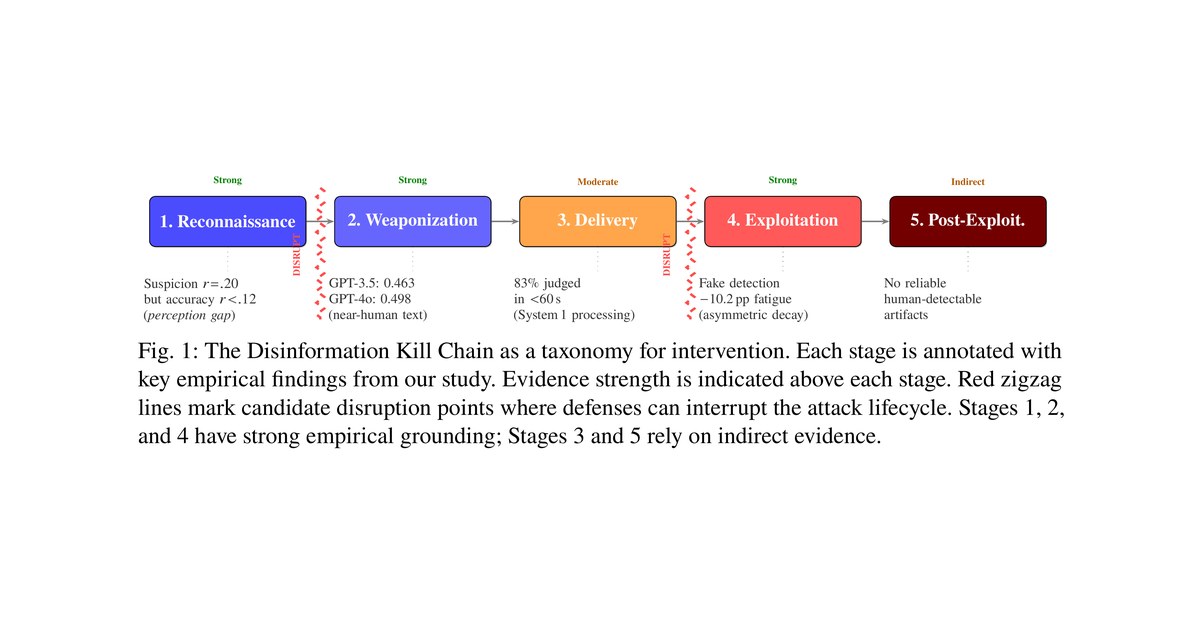
Interrupting the Chain: Our Kill Chain Paper at INFORMATIK 2026
Today the workshop “From Prompt to Propaganda: Generative AI and the New Dis/Mis-Information Lifecycle” takes place in Dresden, as part of INFORMATIK 2026, organized by the Gesellschaft für Informatik (GI). Marc-Oliver Pahl (IMT Atlantique) leads the workshop. Two papers by Martin Kappes, Marc-Oliver Pahl, and me are part of it. Accepted workshop papers are published…
-
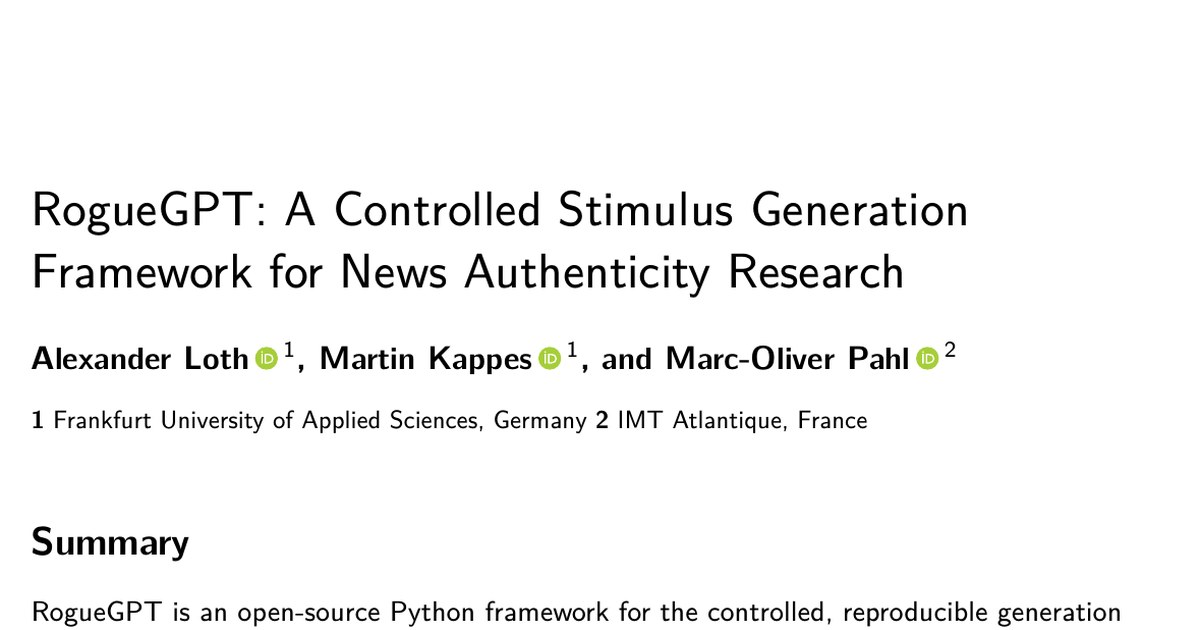
RogueGPT Is Published in the Journal of Open Source Software
Today the Journal of Open Source Software (JOSS) published our paper “RogueGPT: A Controlled Stimulus Generation Framework for News Authenticity Research”, written with Martin Kappes and Marc-Oliver Pahl. JOSS reviews the software along with the paper: reviewers install it, check that it does what the paper says, and look at the documentation and tests. What…

